
Scrape Google Maps to Collect Business Listings, Reviews, and Locations
More people than ever use online maps to find nearby stores, restaurants, and service providers before they decide where to go. Business listings and reviews on Google Maps now play a big role in how customers choose one brand over another. That is why many companies want to scrape Google Maps to see what is really happening in their local markets.
When businesses use Google Maps data scraping, they can spot trends in customer choices, pricing, and service quality. This helps them learn which areas are growing and which competitors are getting the most attention. Customer feedback also matters. A Google Maps reviews scraper makes it easier to study what people are saying and why they prefer one business over another.
Location insights are just as important. With Google Maps location data, brands can understand where customers are and how far they are willing to travel. At TagX, we support companies with web scraping Google Maps services and act as a trusted Google Maps data provider to extract local business data from Google Maps at scale.
Why Businesses Need to Scrape Google Maps for Market Intelligence
Google Maps gives businesses a clear view of what is happening in their market. It shows which companies are nearby, how they are rated, and how often people interact with them. When companies scrape Google Maps, they can compare their own listings with competitors and see who is getting the most attention. This makes it easier to spot gaps in pricing, services, and customer experience.
With Google Maps data scraping, brands can go beyond simple business names and addresses. They can review customer trends, popular categories, and busy locations. As a result, new market opportunities become easier to find. A business might notice an area with strong demand but little competition, which helps guide smarter growth plans.
Business listings and customer feedback also support better decisions. Reviews show what customers like and what they do not. Listings show how competitors describe their services. Together, this information helps teams improve their offers, adjust their messaging, and reach the right audience with more confidence.
Read more: How to Scrape Google News for News Monitoring and Market Research
Understanding Google Maps Business Listings and Location Data
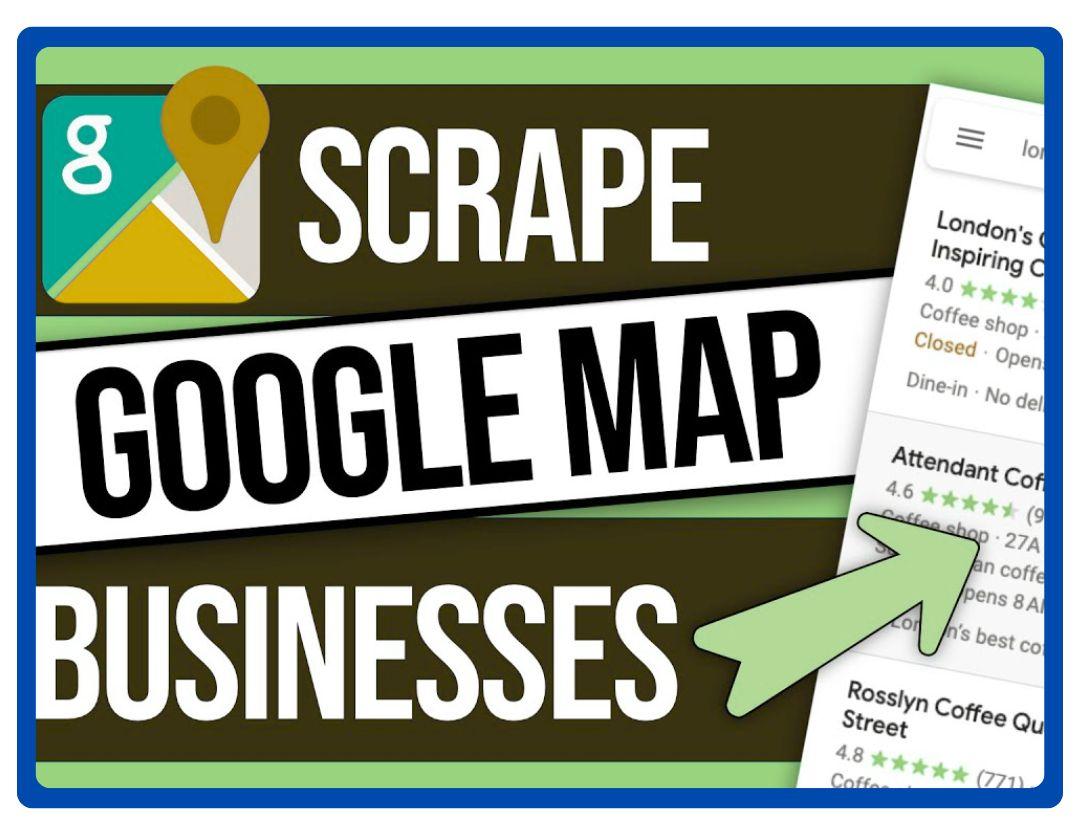
Google Maps business listings hold much more than just a company name. Each listing gives useful details that help businesses study the market and understand customer behavior.
Business listings often include:
- Business name and category
- Physical address and service area
- Phone number and website
- Opening hours
- Customer ratings and written reviews
- Photos and popular times
This information becomes even more powerful when combined with Google Maps location data. Location insights show where customers are active and where businesses are clustered. As a result, companies can spot high-demand areas, choose better store locations, and target the right neighborhoods for marketing and sales.
Many businesses also need structured data for deeper research. There are reliable ways to extract local business data from Google Maps and turn it into organized datasets for geo-based analysis.
This data can be used to:
- Compare competitors by location
- Find underserved areas
- Track business growth across regions
- Support sales and expansion planning
How Web Scraping Google Maps Works
Web scraping Google Maps is the process of collecting public business and location data in an automated way. Instead of checking listings one by one, software systems visit Google Maps pages, read the visible information, and organize it into structured formats. This allows companies to gather large amounts of data in far less time than manual research.
When businesses scrape Google Maps, they can capture many useful details such as business names, addresses, phone numbers, categories, ratings, reviews, and location coordinates. This also includes opening hours, service areas, and popular times. All of this data helps paint a clear picture of how local markets work and where customers are most active.
The reason companies scrape Google Maps for research is simple. It allows them to study thousands of locations at once. This makes it easier to compare competitors, track trends, and plan growth. Scalable data collection gives teams the insight they need to make smarter and faster business decisions.
Using Google Places Scraper for Business Discovery
Google Places data helps companies find new business opportunities. Instead of just showing what exists on a map, it reveals which businesses are active, growing, and getting customer attention. This makes it easier for sales and marketing teams to decide where to focus their efforts.
Google Places data supports business discovery by helping teams:
- Find new leads in specific industries
- Spot fast-growing businesses
- Identify locations with high customer traffic
- Build targeted outreach lists
A Google Places scraper helps companies collect this data across many cities and categories at once. It allows teams to search by keywords, location, and business type so they can find the right prospects without wasting time.
This data is often used to:
- Build sales lead databases
- Plan local marketing campaigns
- Discover new partnership opportunities
- Track market growth by region
At TagX, we act as a trusted Google Maps data provider for enterprises that need large-scale business discovery data. We help companies access structured Google Places data that supports smarter sales, marketing, and growth strategies.
Contact TagX to access high-quality Google Maps business data.
How to Collect and Analyze Customer Reviews from Google Maps
Customer reviews are one of the most trusted sources of business feedback. People rely on them to choose where to shop, eat, or book a service. For companies, these reviews offer a clear look at customer satisfaction, service quality, and brand reputation across different locations.
Why Customer Reviews Matter for Brand and Competitor Analysis
Customer reviews show how people feel about a business. They highlight what customers like, what they dislike, and what they expect. This makes reviews a strong source of insight for both brand monitoring and competitor research. By studying reviews, companies can see why one business gets more praise than another and what drives customer loyalty.
How a Google Maps Reviews Scraper Collects Feedback
A Google Maps reviews scraper gathers public reviews, star ratings, and dates from business listings. Instead of reading comments one by one, businesses receive large sets of feedback in an organized format. This makes it easier to compare multiple locations, brands, or competitors in a short time.
How to Extract Google Reviews for Deeper Insights
When companies extract Google reviews, they can study patterns in customer opinions. They can track common complaints, popular features, and changes in sentiment over time. This helps teams improve services, respond to customer needs, and stay ahead of competitors with data-driven decisions.
Why Businesses Choose TagX for Google Maps Data Collection
Businesses need reliable Google Maps data to stay ahead in competitive markets. From finding new leads to tracking customer feedback, clean and well organized data plays a key role in smart decision making. That is why many companies rely on TagX when they need large scale and dependable Google Maps data services.
How TagX Handles Complex Google Maps Data Extraction
Enterprises need data that is accurate, structured, and ready to use. That is why many companies turn to TagX when they need to scrape Google Maps for business listings, reviews, and location insights. We manage large volumes of public Google Maps information and convert it into clean datasets that teams can work with easily.
Why Enterprises Trust TagX as a Google Maps Data Provider
TagX is a trusted Google Maps data provider for companies that rely on dependable business intelligence. We support Google Maps data scraping across multiple industries and regions. We also collect Google Maps location data so businesses can better understand where markets are growing and where demand is strongest.
How TagX Helps Businesses Scrape Google Maps at Scale
TagX helps companies extract local business data from Google Maps for sales, research, and planning. We also handle web scraping Google Maps projects that include reviews and ratings through Google Maps review scraper workflows. For deeper insight, we extract Google reviews so teams can track customer sentiment. When clients need Google Places data, we provide google places scraper based data collection across cities and categories with high accuracy and consistency.
Compliance and Ethical Considerations When Collecting Google Maps Data
Collecting public data must always be done with care and responsibility. When businesses use web scraping Google Maps, they need to respect data privacy, platform rules, and local laws. This means focusing only on publicly available information and avoiding any data that is private or restricted. It also includes the following fair use practices, and making sure that data is used for legitimate business purposes.
Responsible data collection also means limiting how requests are made and how often they are sent. This helps avoid putting strain on platforms while still allowing companies to gather useful insights. When a Google Places scraper approach is used, it should follow clear guidelines so that business listings, reviews, and location details are collected in a transparent and ethical way. By working with experienced data partners, companies can ensure their Google Maps data projects stay compliant while still delivering valuable business intelligence.
Read also: Top Data Providers for Google Trends Scraping in 2026
Conclusion
Google Maps data gives businesses a clear view of how local markets work. It helps teams understand where customers are, which competitors are active, and what people are saying about different brands. With this insight, companies can make better choices about where to expand, how to improve their services, and how to reach the right audience.
Reliable data also matters. Poor quality or incomplete information can lead to wrong decisions. That is why working with an experienced data partner is so important. A trusted provider ensures that business listings, reviews, and location details are collected, organized, and delivered in a way that supports real business goals.
If you want to use Google Maps data to drive growth, Contact TagX today. Our team provides accurate and well-structured Google Maps data services for sales, market research, and competitive analysis. Let TagX help you turn Google Maps data into real business results.
FAQs
1. Can I collect Google Maps data for multiple cities at the same time?
Yes. Businesses often need data from many cities or regions at once for market research, lead generation, or expansion planning. Large-scale Google Maps data collection makes it possible to analyze trends across different locations in one project.
2. How often should Google Maps business data be updated?
Google Maps listings change often as businesses open, close, or update their details. Many companies refresh their datasets monthly or quarterly to keep their sales, marketing, and research efforts accurate.
3. What types of industries benefit most from Google Maps data?
Industries like retail, real estate, food and beverage, healthcare, logistics, and B2B services gain strong value from Google Maps data because location, competition, and customer reviews play a major role in buying decisions.
4. Can Google Maps data be used for franchise or store expansion planning?
Yes. Businesses use Google Maps data to find areas with strong customer demand, low competition, or high foot traffic, which helps them choose better locations for new stores or franchise outlets.
5. What file formats are best for working with Google Maps data?
Most businesses prefer formats like CSV, Excel, or JSON because they are easy to import into CRM systems, analytics platforms, and mapping software for further analysis.