

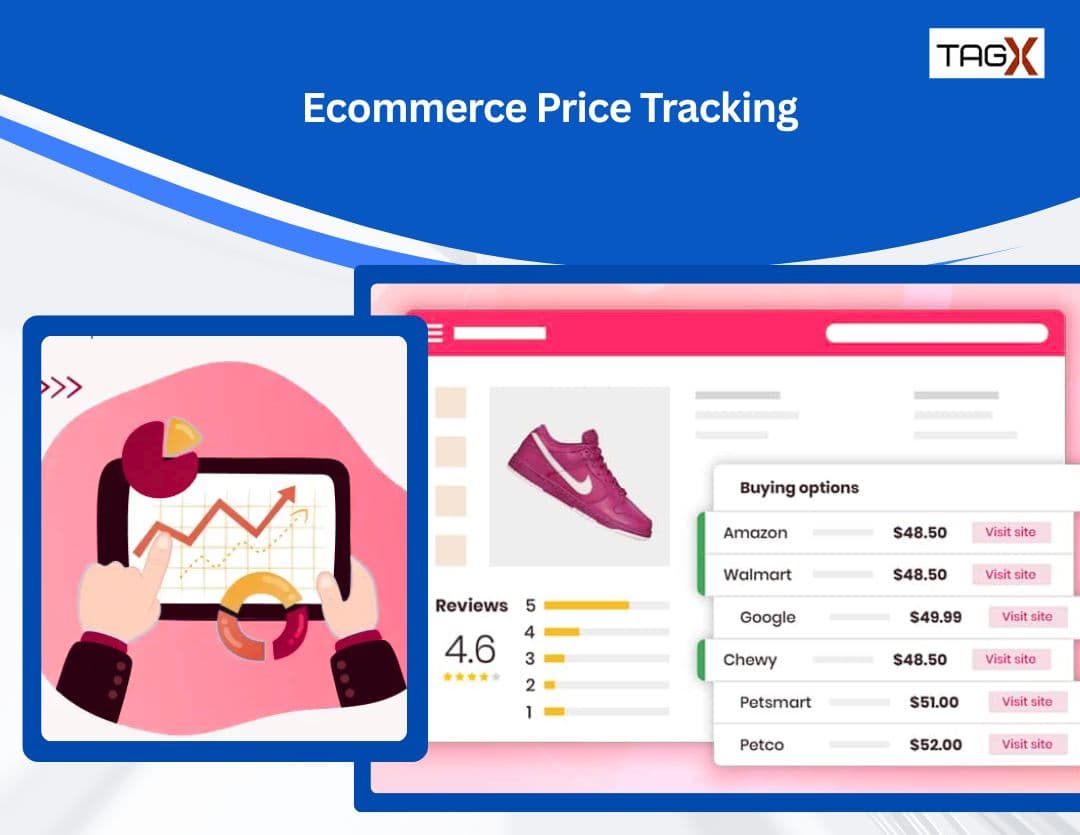
Online prices change faster than ever. Many ecommerce retailers now update prices multiple times a day to stay competitive in crowded markets. This constant movement means brands can no longer rely on manual checks or guesswork to understand what competitors are doing.
That is why automated data and real-time intelligence have become essential. Businesses now depend on competitor price tracking to spot market shifts early and respond with confidence. At the same time, strong ecommerce price monitoring helps teams protect profit margins while staying attractive to shoppers.
In this guide, we compare leading platforms that help brands monitor pricing changes at scale and make smarter decisions in today’s fast-moving e-commerce environment.
Why Competitor Price Tracking Matters in Modern Ecommerce
Online shopping has become highly price-sensitive. Customers compare products across multiple stores before they buy, and even small price differences can change their decision. Because of this, brands feel constant pressure to adjust prices quickly and stay competitive.
Strong competitor price tracking helps ecommerce teams respond to dynamic pricing pressure in real time. When businesses are consistently monitoring competitor prices, they can protect margins, avoid unnecessary discounts, and position their products more effectively in the market. It also supports smarter promotions and better timing.
Just as important, detailed competitor price analysis gives brands a clear view of pricing trends, not just one-time snapshots. With the right insights, companies can meet customer expectations, stay profitable, and compete with confidence in a fast-moving e-commerce landscape.
Read more: Best web scraping services for e-commerce price monitoring
Key Features to Look for in Ecommerce Price Monitoring Platforms
Choosing the right pricing platform can make a big difference in how well your business reacts to market changes. Not all platforms deliver the same level of speed, accuracy, or coverage, so it is important to know what features truly matter.
When evaluating options for ecommerce price monitoring and ecommerce competitor price monitoring, focus on capabilities that support reliable and scalable decision-making. Here are the key features to review:
- Data accuracy: Clean and well-matched product data is essential. Inaccurate SKU matching can lead to poor pricing decisions and lost revenue.
- Update frequency: Look for platforms that refresh data frequently. Faster updates help you respond quickly to competitor price changes.
- Scalability: Your needs will grow. The platform should handle large product catalogs and multiple competitors without slowing down.
- Coverage across marketplaces: Strong systems track prices across major marketplaces, brand websites, and regional stores so you get a full market view.
- Integration capabilities: Easy integration with your pricing, analytics, or business intelligence systems saves time and improves workflow efficiency.
- Alerts and reporting: Automated alerts and clear reports help teams act quickly when competitors change prices or when margins are at risk.
Focusing on these features ensures your pricing strategy stays accurate, timely, and competitive as your ecommerce business expands.
Leading Platforms That Offer Real-Time Competitor Price Monitoring
As ecommerce competition grows, brands are looking for reliable ways to keep up with constant price changes. Some businesses prefer self-service data platforms, while others choose fully managed data providers that deliver ready-to-use insights. The best fit depends on your technical resources, scale, and how quickly you need pricing updates.
Below is a neutral comparison of well-known providers that support competitor price monitoring and ecommerce price tracking, with TagX highlighted as a service-first alternative.
Quick Comparison Table
| Provider | Best For | Key Strengths | Notes |
|---|---|---|---|
| TagX | Brands that want fully managed real-time pricing data | Real-time data delivery, custom data pipelines, scalable marketplace coverage | Service first approach with tailored outputs |
| ScrapeHero | Businesses needing ready datasets and APIs | Managed scraping services, structured ecommerce data | Good for teams that prefer outsourced data |
| Apify | Developers and automation teams | Large actor marketplace, flexible automation workflows | Requires technical setup |
| Bright Data | Enterprise-scale data collection | Large proxy network, global coverage | Often used for complex data needs |
| Zyte | Companies focused on web data extraction | Smart crawling and data extraction capabilities | Popular among technical teams |
| Octoparse | Users wanting visual scraping workflows | No code interface, scheduled scraping | Suitable for smaller-scale needs |
Provider Snapshot
TagX stands out for its service-first model. Instead of requiring teams to manage scraping infrastructure, TagX delivers structured, real-time ecommerce pricing data tailored to each client’s workflow. This makes it a strong fit for brands that want scalable intelligence without added technical overhead.
ScrapeHero provides managed data extraction and ready-to-use datasets. Many ecommerce teams use it when they want outsourced data collection without building internal pipelines.
Apify is popular with developers because of its flexible automation environment and large library of prebuilt actors. However, it typically requires technical knowledge to configure and maintain.
Bright Data is known for its large proxy infrastructure and enterprise-grade data collection capabilities. It is often selected for complex or large-scale web data projects.
Zyte focuses on smart web crawling and structured extraction. Technical teams often choose it for building custom data workflows.
Octoparse offers a visual scraping interface that appeals to non-technical users. It works best for smaller projects or teams that prefer a no-code approach.
For ecommerce brands that want fully managed, real-time pricing intelligence without maintaining scraping systems, service-focused providers like TagX are becoming an increasingly practical choice.
Get real-time competitor pricing data tailored to your business with TagX.
How to Track Competitor Pricing Changes Without Constant Manual Checks
Manually visiting competitor websites every day is slow and unreliable. Prices can change at any moment, and manual reviews often miss critical updates. Businesses that want to stay competitive need a more automated and data-driven approach.
If you are wondering how to track competitor pricing changes without constantly checking their websites, the answer lies in intelligent automation and structured data workflows. Modern systems enable teams to automate monitoring competitor prices and respond faster to market shifts.
Automation and Continuous Data Extraction
Automation removes the need for repetitive manual checks. With automated web data extraction, pricing information is collected continuously in the background. This improves data consistency and reduces human error. It also allows ecommerce teams to focus on pricing strategy rather than data gathering.
Scheduled Crawling and Frequency Control
Scheduled crawling is essential in fast-moving markets. Businesses can configure crawl frequency based on product volatility, marketplace behavior, or promotional cycles. High-frequency crawling helps capture near real-time price movements, while controlled scheduling helps manage infrastructure load.
Structured Data Pipelines
Raw scraped data is only useful when it is properly organized. Structured data pipelines normalize product identifiers, match SKUs across competitors, and standardize price fields. This ensures pricing data flows cleanly into analytics systems and supports accurate benchmarking.
Real Time Alerts and Analytical Dashboards
Automated alerting systems notify teams when significant price changes occur. Threshold-based triggers, margin alerts, and competitor movement flags help teams act quickly. Analytical dashboards then visualize trends, helping decision makers spot patterns and pricing risks early.
API Driven Pricing Workflows
API based data delivery allows competitor pricing intelligence to integrate directly into pricing engines, BI platforms, and revenue management systems. This creates a closed-loop pricing workflow where data collection, analysis, and price updates work together seamlessly.
By combining these technical approaches, ecommerce brands can maintain full visibility into competitor pricing without relying on manual checks.
Why TagX Is a Smarter Approach for Ecommerce Price Intelligence
Many ecommerce brands struggle with platforms that require constant setup, maintenance, and internal technical support. As pricing environments become more complex, businesses are shifting toward partners that deliver ready to use data instead of adding more operational work.
TagX takes a service first approach to competitor price tracking, helping brands access real time pricing intelligence without managing scraping infrastructure. Unlike traditional software platforms that rely on self service dashboards, TagX builds customized data pipelines designed around each client’s catalog, competitors, and update frequency requirements.
For teams focused on ecommerce competitor price monitoring, this model provides greater flexibility and accuracy. TagX delivers structured ecommerce datasets that are normalized, validated, and ready for analysis. This reduces data cleaning efforts and improves decision speed.
What Makes TagX Different
- Fully managed data services: TagX handles the complete data extraction and delivery process, so your team does not need to maintain scraping systems.
- Real-time pricing intelligence: Continuous data collection helps brands react quickly to market changes and competitor moves.
- Custom-built data pipelines: Workflows are tailored to each client’s product catalog, target competitors, and preferred data format.
- Structured and analysis-ready datasets: Clean, normalized outputs reduce manual processing and support faster decision-making.
- Scalable ecommerce price tracking: TagX supports large product catalogs across multiple marketplaces and regions without performance issues.
By combining real-time delivery, deep customization, and fully managed workflows, TagX provides a practical alternative to traditional platforms that often demand heavy internal resources.
Read also: Best Amazon Price Tracker Services for US Shoppers
Best Practices for Accurate Competitor Price Analysis
Getting competitor pricing data is only the first step. The real value comes from making sure the data is clean, matched correctly, and ready for reliable decisions. Without proper processes, even large datasets can lead to wrong pricing moves.
To improve competitor price analysis, businesses must focus on data quality and normalization across their ecommerce price monitoring tool workflows. The following best practices help ensure your pricing intelligence stays accurate and actionable.
SKU Matching
Accurate SKU matching is the foundation of pricing intelligence. Each product must be correctly mapped to its exact competitor equivalent. Poor matching can lead to false comparisons and bad pricing decisions. Use advanced product identifiers such as GTIN, UPC, or brand plus model logic to improve match accuracy.
Variant Normalization
Many products have multiple variants, such as size, color, or pack count. Variant normalization ensures you compare like with like. For example, a 500 ml bottle should not be compared with a 1 liter version. Proper normalization improves the reliability of competitive insights.
Geo Pricing Awareness
Prices often vary by region, city, or country. Geo pricing controls help businesses understand local price differences and avoid misleading averages. Always capture location-specific pricing when operating across multiple markets.
Promo Price Detection
Temporary discounts, flash sales, and coupon pricing can distort competitive views. Strong systems detect promotional pricing separately from the base price. This allows teams to understand true market positioning versus short-term campaigns.
MAP Compliance Monitoring
For brands that enforce Minimum Advertised Price policies, continuous monitoring is essential. Automated checks help identify violations quickly and protect brand value across reseller networks.
Data Validation and Quality Checks
Regular data validation ensures the pricing feed remains trustworthy. This includes duplicate removal, outlier detection, and timestamp verification. High-quality validation processes reduce noise and improve confidence in pricing decisions.
By following these best practices, ecommerce teams can turn raw price data into reliable competitive intelligence that supports smarter and faster pricing strategies.
Conclusion
Selecting the right pricing intelligence approach can directly impact your margins, market position, and growth speed. With ecommerce becoming more competitive each year, businesses need reliable data that helps them react quickly and confidently.
As you evaluate options for competitor price tracking, focus on what truly drives long-term value. Accuracy, update frequency, scalability, and data readiness should all play a role in your decision. While many ecommerce price monitoring tools offer basic visibility, not all deliver the depth and reliability required for a serious pricing strategy.
For growing and enterprise brands, real-time intelligence is no longer optional. The ability to receive clean, structured pricing data at scale helps teams move faster and avoid costly pricing mistakes. This is where working with a scalable data partner becomes especially important.
If your team wants fully managed, real-time ecommerce pricing data without the burden of maintaining complex infrastructure, contact TagX to explore how a service-first approach can support your pricing strategy.